
What is Cube Utilization?
Cube utilization is a supply chain metric that measures how much of a warehouse’s cubic space is being used. Different from measuring the length and width of the warehouse floor area, cube utilization also considers the height of the building.
The metric is a percentage of how much of a warehouse’s total space is currently used:
Cube Utilization (%) = (Actual Utilized Volume ÷ Total Available Volume) × 100
-
“Actual utilized volume” includes inventory, packaging, and pallets or bins.
-
“Total available volume” is the space in the warehouse that could potentially be used for storage, so it doesn’t include space like offices, restrooms, and loading bays.
Why Does Cube Utilization Matter?
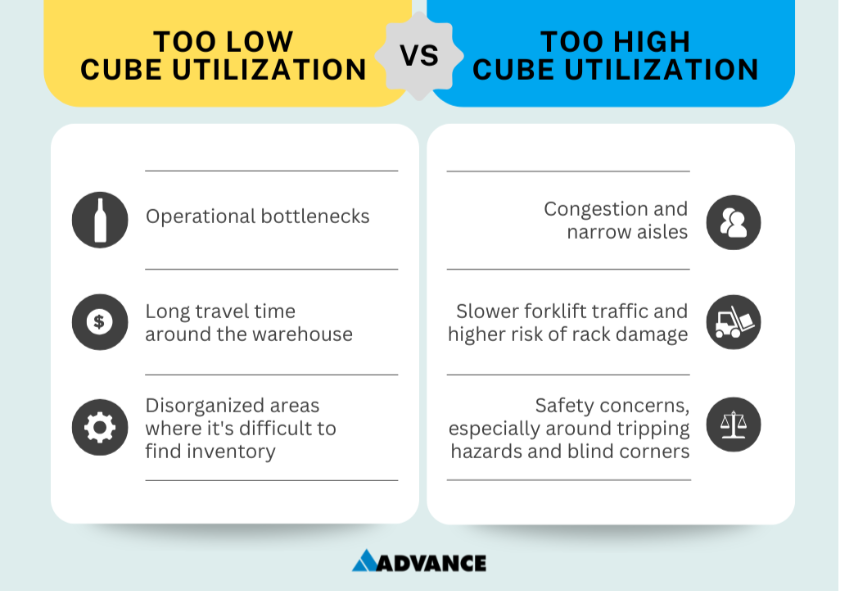
Cube Utilization is one of the metrics used to measure efficiency. It’s influenced by storage layout design, aisle width, rack style, and other ways of organizing space and density.
How Does Warehouse Cube Utilization Vary by Industry?
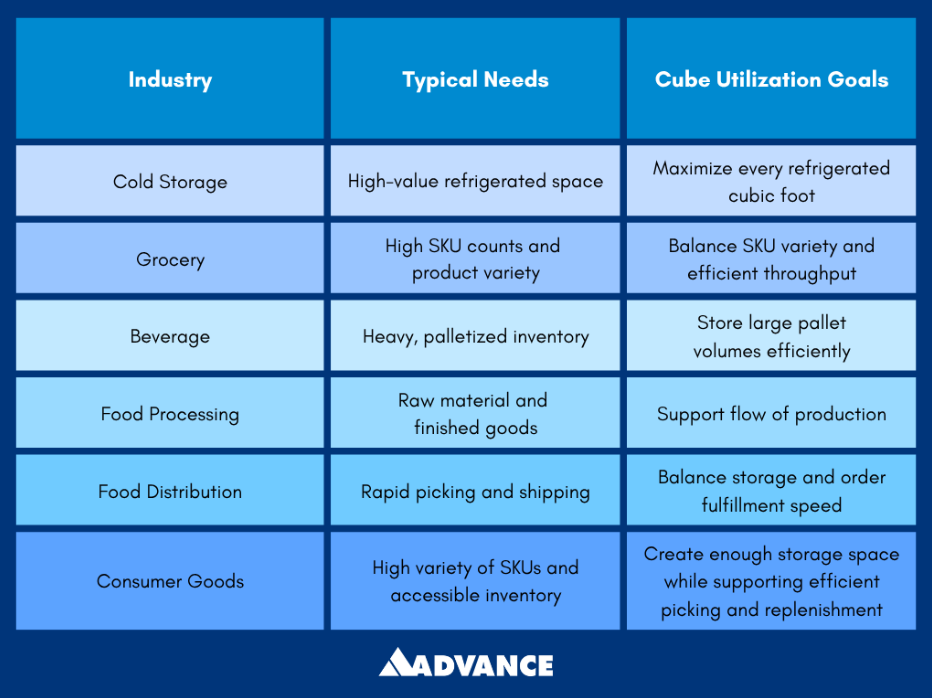
Cube utilization varies depending on the industry, and what is considered a “bad” percentage of space used in one industry could be excellent in another.
For example, cold storage warehouses prioritize optimization, efficiency, and safety when using refrigerated space. As a result, taller racking is often part of cold storage rack design.
On the other hand, warehouses in the grocery industry can commonly carry 40,000-50,000 SKU types and face shifting demand. Density and efficiency still matter, but the grocery industry will also prioritize accessibility of inventory and fast order fulfillment. In that case, grocery warehouses may have a lower cube utilization rate than denser warehouses for better speed and flexibility.
Below is a breakdown of how common storage industries may approach cube utilization differently:
Cube Utilization and Your Storage Racking Systems
The right racking system for your cube utilization strategies happens in a tradeoff of:
-
Storage density
-
Selectivity and accessibility of individual pallets
-
Throughput and speed
-
Inventory rotation requirements (FIFO and LIFO)
Automation, too, can help maximize cube utilization. Automation can work in denser environments in ways that personnel and forklifts may not be able to.
For example, Semi-Automated Pallet Shuttle Systems are battery-powered shuttles that travel inside of storage lanes to move pallets, rather than driving forklifts into the rack. They allow deeper storage lanes, higher rack heights, and reduced aisle space for maximizing storage space.
The engineers at Advance Storage Products care about the unique needs of every operation when designing racking solutions. Contact us to discuss the most effective ways to make use of your warehouse space.