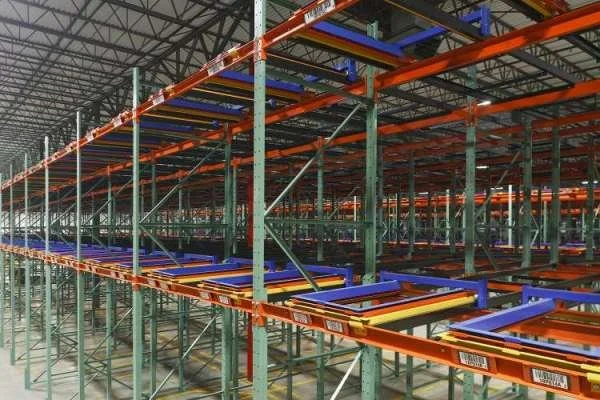
Pushback Pallet Racking Solutions
What Is Pushback Pallet Racking?
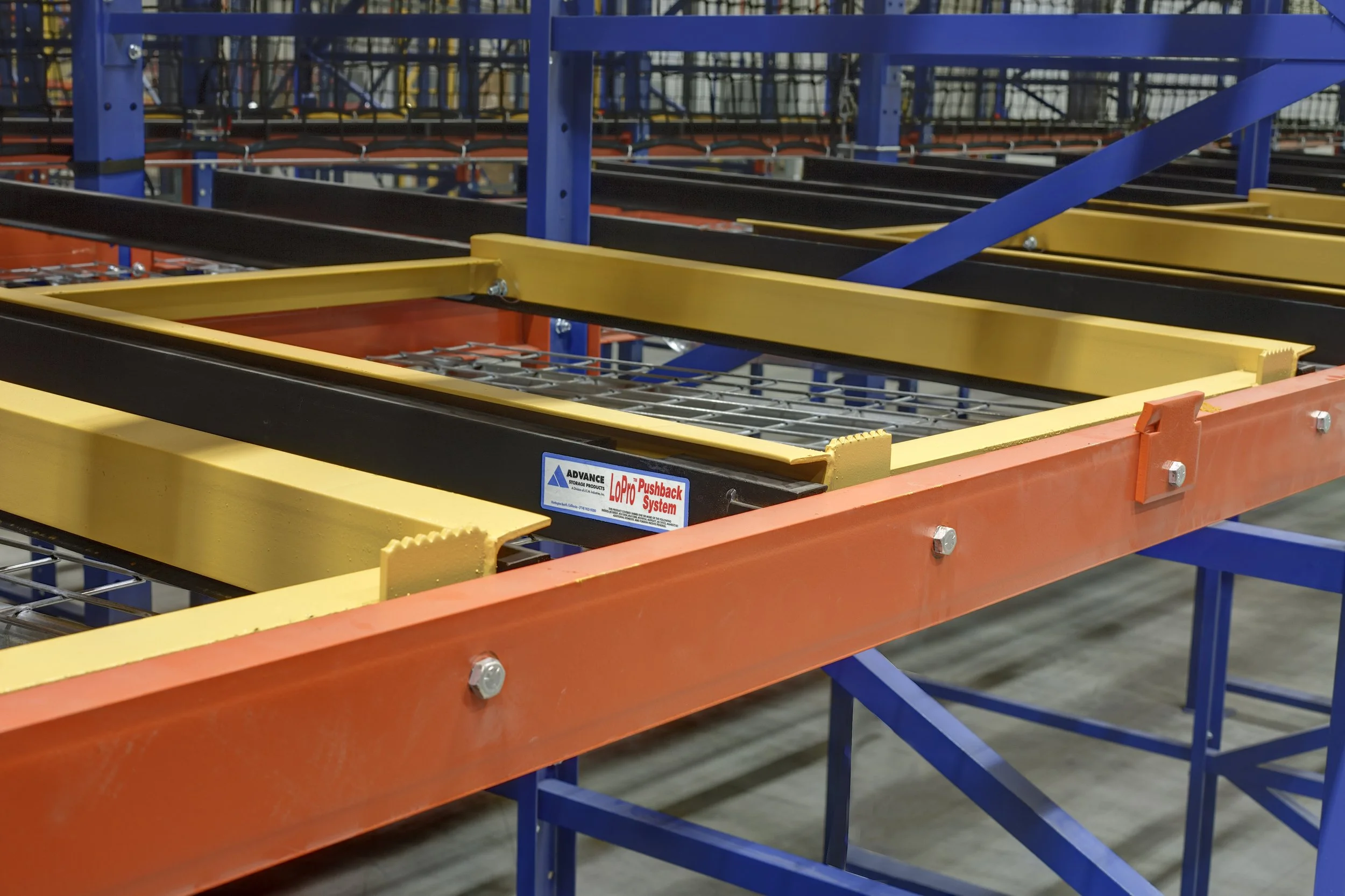
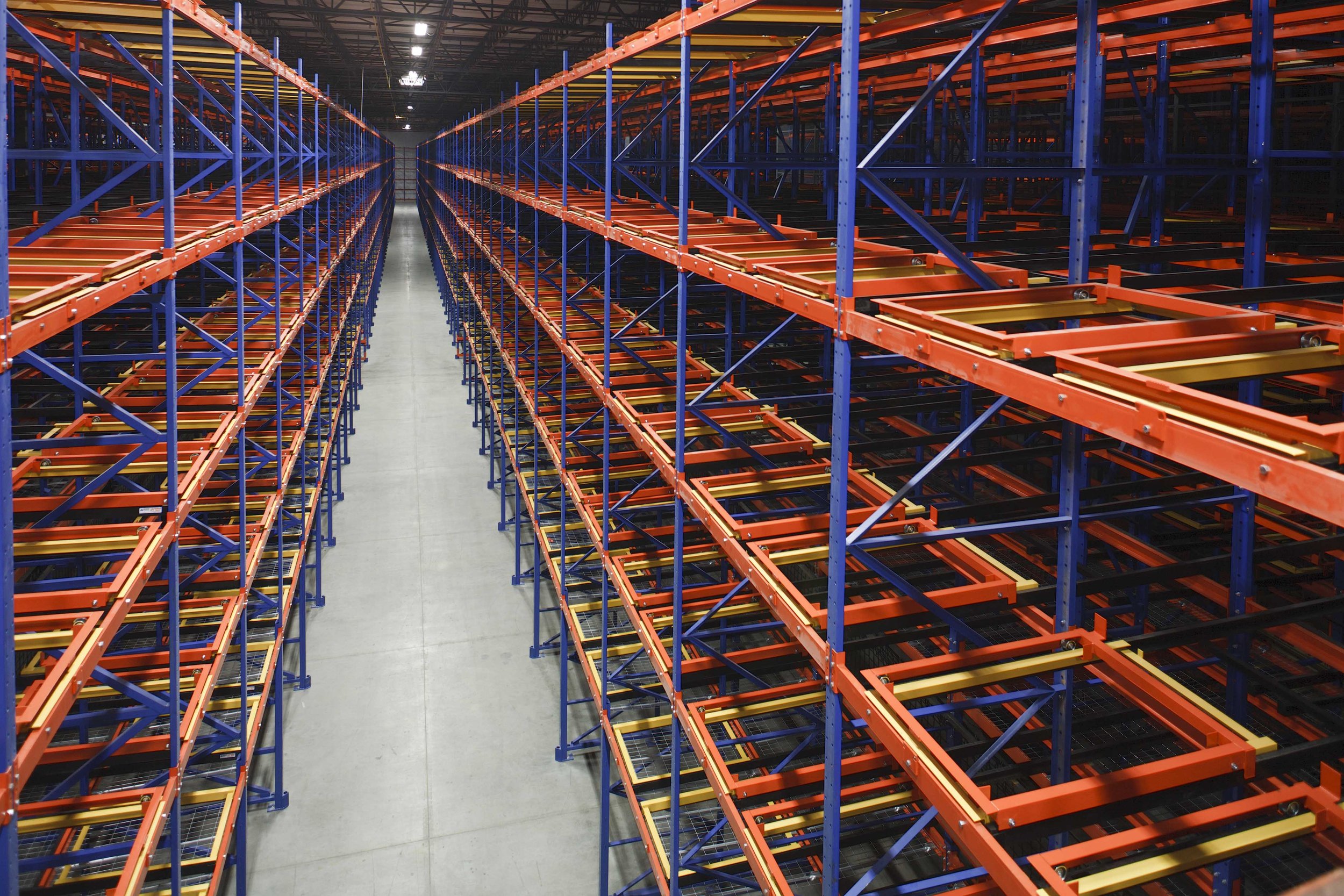
Pushback pallet racking is a high-density storage system that allows pallets to be stored multiple positions deep while keeping all loading and unloading at the aisle face. Pallets are placed on carts or trays that move along inclined rails. When a pallet is loaded, it pushes the previous pallet back; when a pallet is removed, gravity brings the next pallet forward.
Pushback operates on a Last-In / First-Out (LIFO) inventory flow and is designed to significantly increase storage density while improving productivity by eliminating the need for lift trucks to enter the rack structure.
Advance Pushback systems are engineered to support a wide range of pallet weights, depths, and operating conditions, and are available in Structural or Roll Form designs to match durability, budget, and lifecycle goals.
How Does Pushback Racking Work?
When the first pallet is loaded from the front, it sits on the first cart in the lane. When the second pallet is loaded, the first pallet “pushes back” behind it one position. The second pallet is then either placed on the rail in a two deep system or placed on the next cart in a 3-6 deep system. This process continues until the lane is full up to six pallets deep.
To remove a pallet, the fork truck driver lifts the pallet off, reverses slowly and the next pallet comes forward and into the front position. This operation is repeated until the lane is empty.
Key Benefits of Pushback Pallet Racking
Higher storage density by reducing aisle count compared to selective rack
Improved throughput with all pallet handling performed from the aisle
Reduced rack damage compared to drive-in systems
Flexible depth configurations, typically 2–6 pallets deep
Simplified operation with intuitive loading and unloading
Scalable design that can be customized by SKU velocity and pallet quality
Pushback is often selected as a balance between selectivity, density, and speed, making it one of the most versatile pallet storage solutions available.
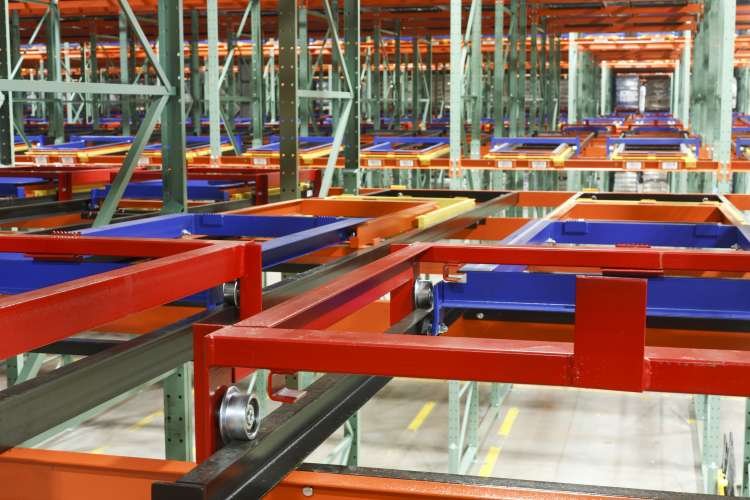
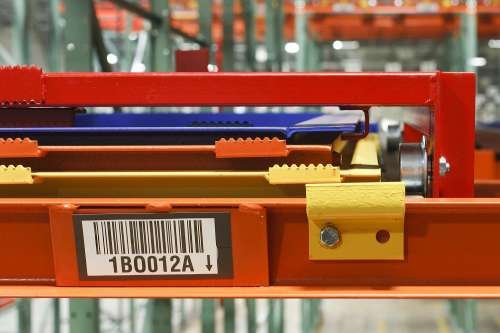
Structural pushback systems use hot-rolled structural steel members and bolted connections, making them ideal for demanding warehouse environments.
Key advantages include:
Superior impact resistance in high-traffic lift environments
Long service life in high-cycle operations
Repairability, with many components replaceable on-site
Enhanced performance in cold storage and freezer applications
Greater tolerance for pallet variability and operational abuse
Structural pushback is commonly specified for food distribution, beverage, grocery, and cold storage facilities where uptime and durability outweigh initial cost considerations.
Benefits of Structural Pushback Components:
Benefits of Roll Form Pushback Components:
Roll form pushback systems use cold-formed steel members and are designed to provide high-density storage at a lower initial investment.
Key advantages include:
Cost-effective solution for controlled operating environments
Lighter components that simplify installation and future reconfiguration
Broad compatibility with common warehouse layouts
Efficient deployment when pallet weights and impacts are predictable
Roll form pushback is best suited for operations with disciplined lift practices, consistent pallet quality, and lower risk of rack contact.
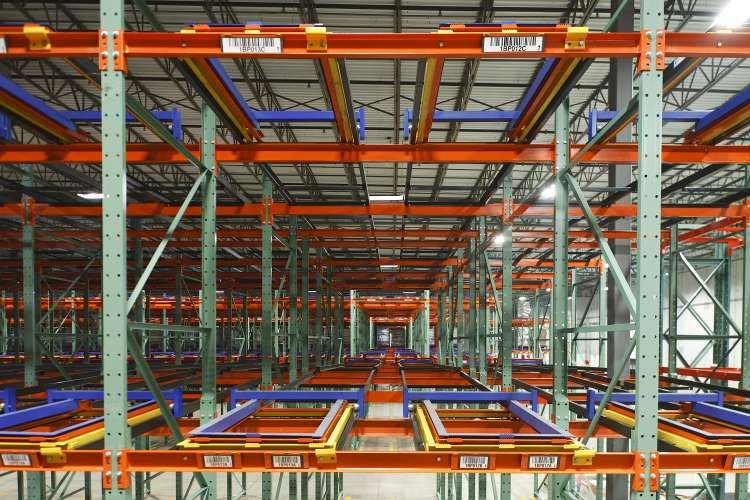
Advance Lo-Pro™ Pushback
Advance Lo-Pro™ Pushback is a low-profile pushback design that maximizes vertical cube while maintaining smooth pallet flow. The compact cart-and-rail design allows for efficient storage in facilities with height constraints or where maximizing pallet positions per bay is critical. Lo-Pro™ systems are commonly configured 2–6 pallets deep and are widely used in food, beverage, grocery, and cold storage environments where density and reliability are key drivers.
Full Support Pushback
Full Support Pushback uses full-length carts or trays to fully support each pallet from front to back. This design accommodates varying pallet conditions, improves load stability, and reduces point loading on pallet decks.
Full support systems are ideal when pallet quality is inconsistent or when heavier loads require enhanced support across the entire pallet footprint.
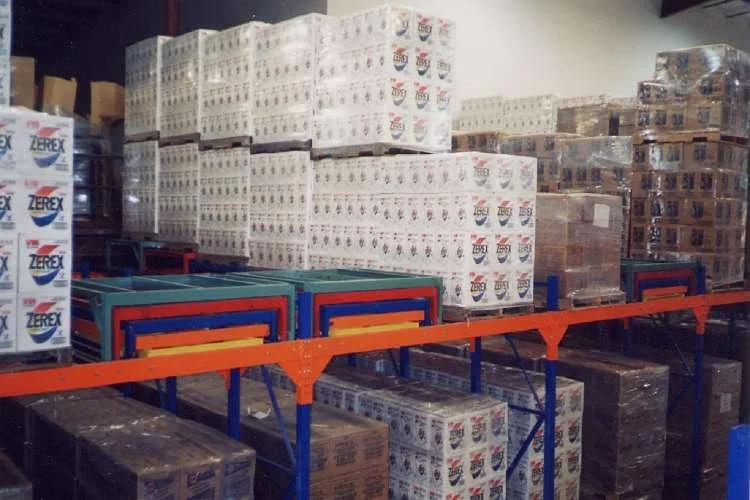
Floor Mounted Pushback
Floor Mounted Pushback systems use carts that travel on floor-mounted rails, transferring pallet weight directly to the slab rather than relying solely on elevated rack structure. Floor mounted designs provide excellent stability and are commonly used in high-volume beverage and food distribution environments.
This configuration is often selected for:
Very deep pushback lanes
Heavy pallet loads
Facilities with slab conditions well suited for floor-supported systems
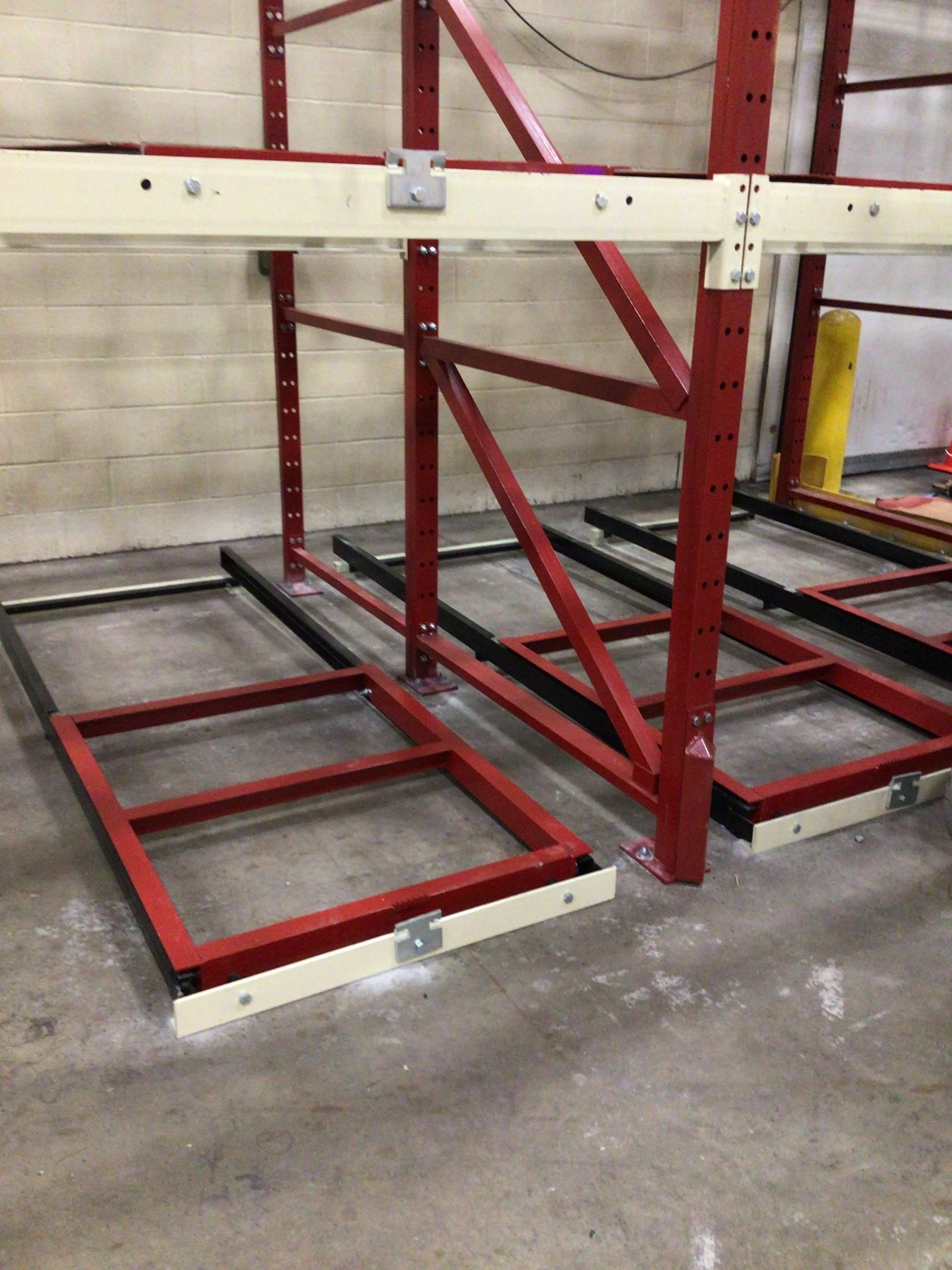
Pushback Retrofit Systems
Pushback Retrofit systems allow facilities to convert existing selective or drive-in racking into pushback storage without replacing the entire rack structure. Retrofits are engineered to integrate with both structural and roll-formed rack systems, pending engineering review and load verification.
Retrofit pushback:
Increases density within an existing footprint
Reduces capital expense compared to full rack replacement
Shortens installation timelines
Minimizes operational disruption
Pushback Features:
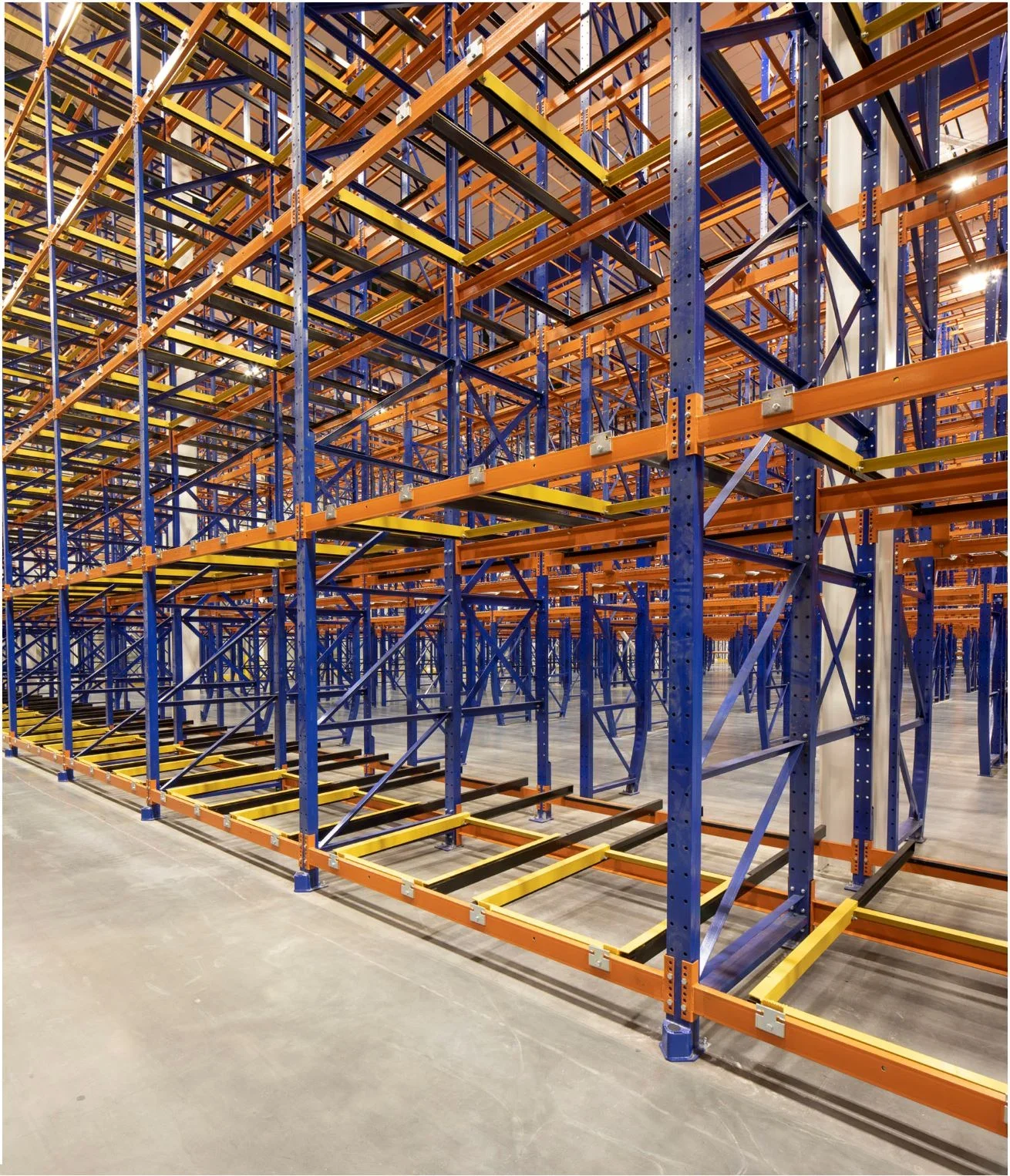
Linked Carts: Eliminates the possibility of a load being stranded and suddenly rolling out of control.
Serrated Pallet Grips:
Allows imperfect placement of pallets by “grabbing” the underside of the pallet
Ensures that the load remains properly positioned on the cart.
Captured Carts: Prevents cart lift-out by fork truck operators.
Low Profile: The industry’s lowest stack height measuring 6″ on the 6 – deep system.
Welded Rail Frame: Rails are permanently aligned at the factory to prevent field misalignment and costly maintenance.
*Some options are full support and level carts
Industry Applications:
Advance Pushback Pallet Racking is widely used across the following industries:
Food Distribution: Pushback supports dense reserve storage behind pick faces, improves replenishment speed, and reduces aisle requirements—helping food DCs maximize cube while maintaining throughput.
Food Processing: Ideal for staging raw materials, packaging, and finished goods where predictable pallet flows and high-density storage are needed without complex automation.
Beverage: Pushback is commonly used for heavy pallet loads, large SKU quantities, and deep reserve storage—particularly when paired with structural components for durability.
Grocery: Supports high-volume pallet storage with fast access from the aisle, making it effective for reserve inventory feeding case-pick and each-pick operations.
Cold Storage: Pushback is a natural fit for cold and freezer environments where cubic footage is expensive. High-density lanes reduce aisle count and maximize usable cube while limiting lift travel inside the rack.