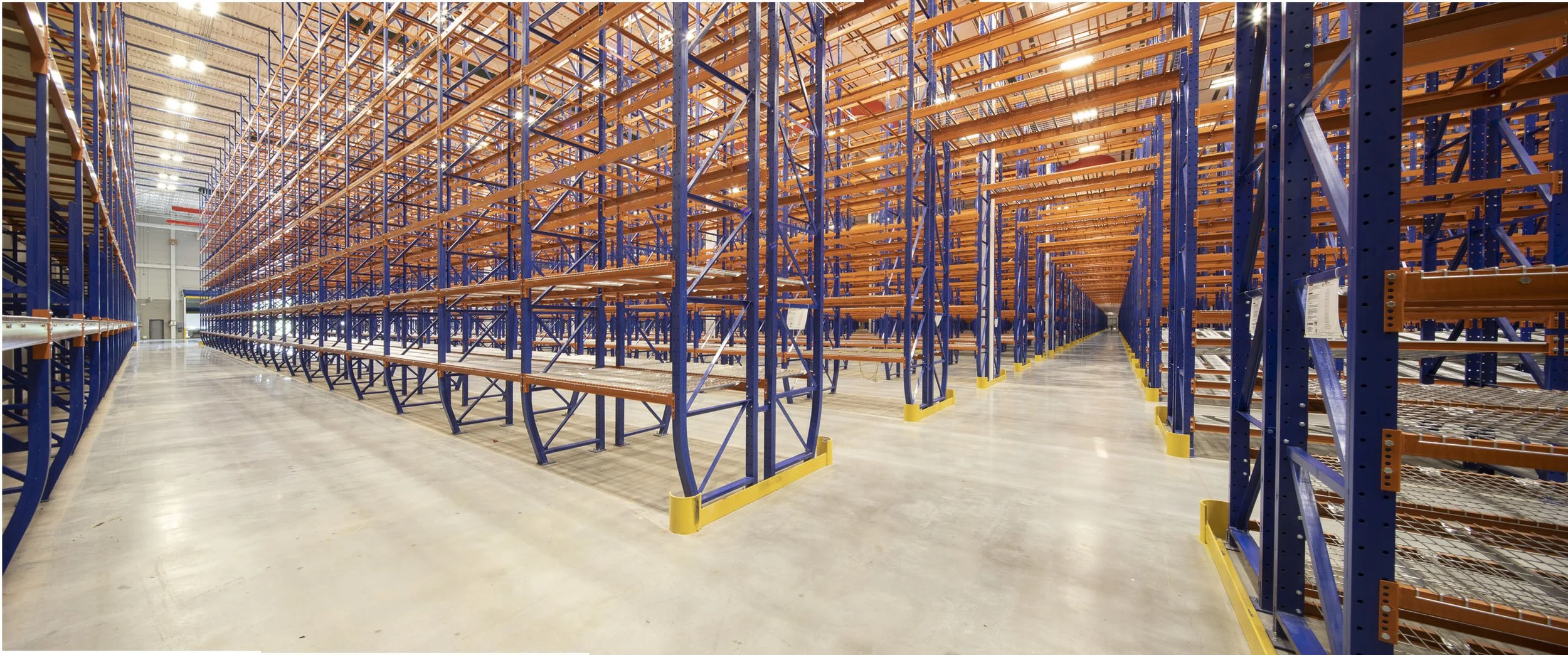
Making Your Pallet Racking Work for Your Operation
Key Takeaway: The right warehouse racking system is determined by the needs of the overall operation, not by the rack alone. When problems arise, the best solution starts with understanding your operational needs and working with a racking expert.
As year-end approaches, some operations enter their peak season, especially those shipping consumer goods, food, and beverages for the winter holidays. This busy period offers a chance to assess how your racking system performs near maximum capacity.
Whether or not you’re in peak season, year-end is a good time to review how smoothly operations ran and where they could improve.
Your storage system plays a major role in the warehouse. If it isn’t supporting your operation, it may be holding you back.
Ingo Dohrendorf, a Senior Systems Integration Manager with Advance, helps develop storage solutions for a range of operations. He shared two common signs that racking is hindering an operation rather than helping it.
Two signs your racking is ready for an upgrade:
Sign #1 — Damaged Racking and Unusable Pallet Positions
Damage can make pallet positions unusable. Impacts from forklifts and other machinery can leave scrapes, dents, or serious structural damage, particularly in facilities with narrow aisles, congestion, or limited visibility.
Unusable positions don’t necessarily mean the racking itself is the problem. Still, widespread damage or high repair costs may make replacing some or all of the racking necessary.
Replacing less-durable, frequently damaged racking with sturdier systems, such as our Fusion racking, can be a long-term investment in reducing damage. Adding protective guards is another way to help. Updating racking can also relocate aisle layouts to reduce congestion and improve forklift, walking, and picking traffic.
Sign #2 — Running Out of Warehouse Storage Space
Congestion affects most facilities once pallet occupancy reaches 90% or more, while 80–85% is generally considered the industry sweet spot. Using tunnels for storage instead of for picking, or even storing pallets in aisles, are major signs that overflowing inventory has gotten out of hand.
Picking takes longer when products require repeated handling, such as moving one pallet to access another behind it.
Overcrowding also poses safety risks. Pallets stacked when they aren’t designed for it or left in aisles, even briefly, can obstruct workers, create tripping hazards, and reduce equipment operators’ visibility.

6 ways your storage system affects warehouse operations
Unusable positions and running out of space are two examples that can be easy to see when they're most extreme, but most often, poor storage affects the overall efficiency of the facility in more subtle ways.
Beyond using space effectively, your storage system also directly contributes to a wide variety of operational goals.
| Operational Goal | Storage System Effect |
|---|---|
| Material and traffic flow | Influences how efficiently products, forklifts, and employees move throughout the warehouse, while minimizing congestion. |
| Inventory management | Supports inventory accessibility, organization, rotation, and replenishment based on the warehouse’s needs. |
| Picking efficiency | Affects how quickly and easily workers or equipment can locate, access, and retrieve products. |
| Labor efficiency | Can reduce unnecessary travel, handling, and repetitive movements throughout warehouse operations. |
| Throughput | Supports how quickly products can move through storage, retrieval, and fulfillment. |
| Cost-effectiveness | Influences how efficiently warehouse space, labor, equipment, and other operational resources are used. |
When you suspect your pallet racking needs updating, what then?
You don't need every answer before reaching out
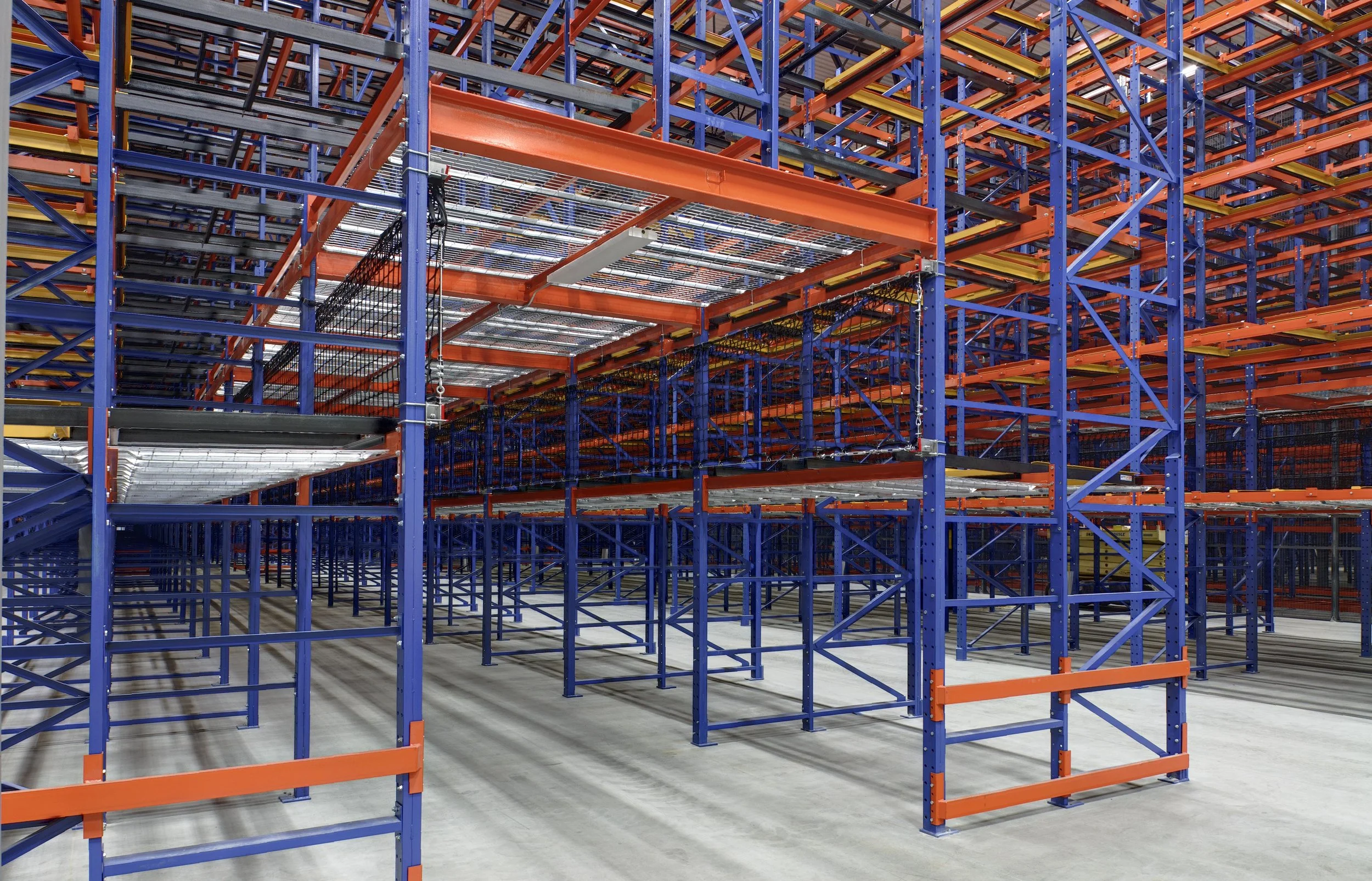
Racking may look simple, but designing a storage system that improves a facility, solves its problems, and meets its needs takes substantial engineering.
Ingo Dohrendorf recommends that if an operation suspects they may have a storage problem or knows they need to update their racking, one of the best first steps is to reach out and talk with an expert. Even if you don't know anything about racking, talking with an expert can help you find what you need.
"Reach out and just start the conversation," Ingo said. "You can run down a rabbit hole somewhere that takes you to a place that doesn't help you in the long run.”
Whether you’re experienced with racking or new to it, an early conversation can help narrow your options and determine whether updating your system is the right solution.
We start with the operation, not the rack
Racking solves the needs of its operation, not the other way around.
In a massive material handling and supply chain industry, there is a large variety of operations, which all have their own storage needs.
"There are huge warehouses out there that have five SKUs — go deep and dense, no big deal. There are other warehouses out there that are small but have hundreds of SKUs, where you can only have one pallet of one item that fits in the entire building at any given moment," Ingo said.
“It just really is very dependent upon what it is they're trying to accomplish and what problem they have."
When working with Advance, we always start with you to find the right system for your needs. Ingo shared that we will often discuss topics like:
Operational goals or problems
What inventory is stored
Picking patterns
General available space in the warehouse
After this conceptualizing phase, ideas start to become initial drawings as the system comes to life. By the time we reach final installation, you have a storage system engineered to meet your needs, and you're ready to continue growing.