
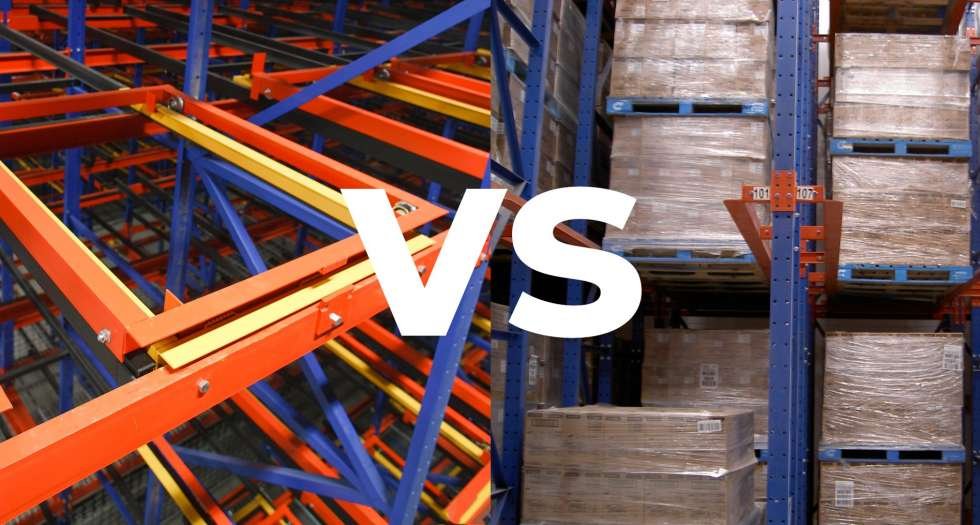
RACK COMPARISON: Pushback vs. Drive-In
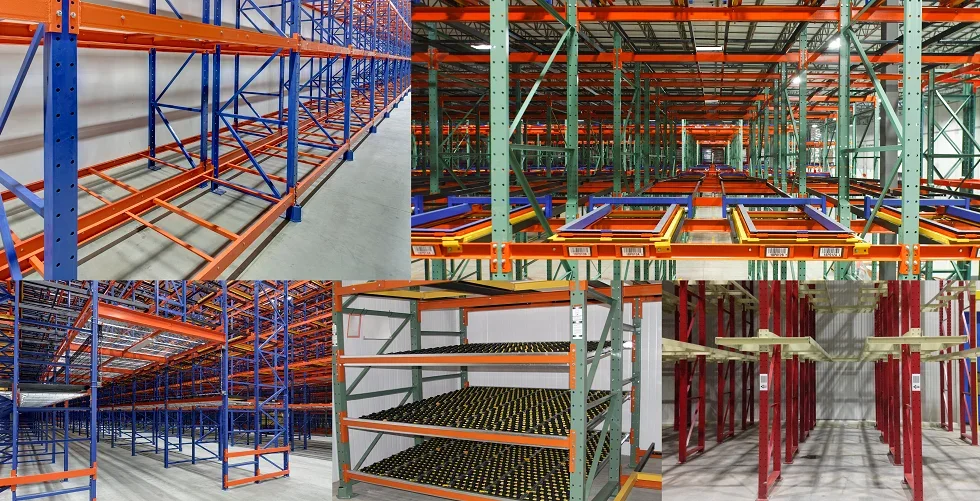
CASE STUDY: In 4,000 sq. ft. (200′ x 20′), the following number of bays can be laid out: Drive-In Rack: 42 bays (56″ c/c bays) x 5 high x 5 deep x 1 wide = 1,050 pallet positions Pushback: 24 bays (100″ c/c bays) x 5 high x 5 deep x 2 wide = 1,200 pallet positions Drive – In Pushback Improvement Rack Pallet Positions 1,050 1,200 14% SKU’s 42 240 471% Utilization 50% 80% 22% Usable Pallet Positions 735 1,080 46% Cost/Pallet Stored $107 $111 <4%> Pushback rack improves existing warehouse storage density up to 25% by eliminating aisles required […]
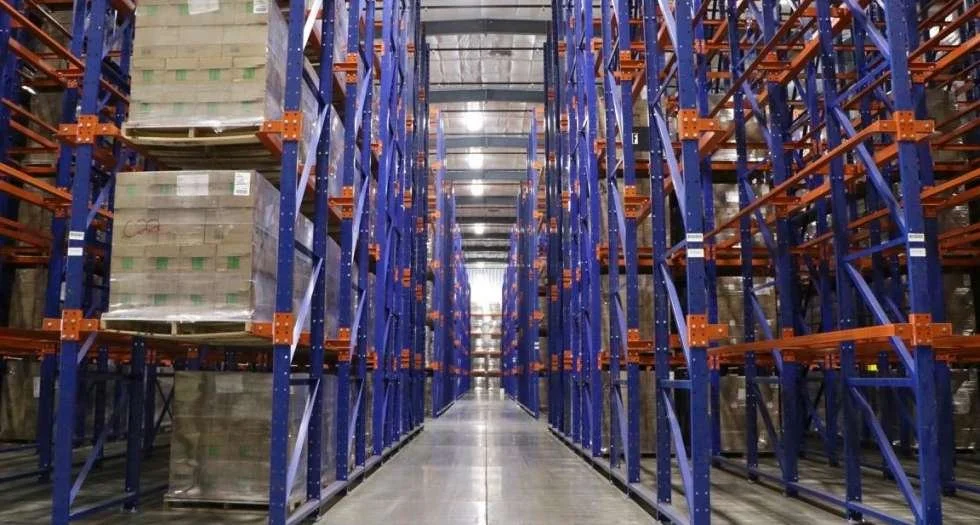
How To: Drive-In Loading Instructions
Start pallet loading from rear floor position to rear top position and continue with this pattern until loading is completed. When loading the rail levels, it is advised upon entry to lower the pallet 1″ below the angle rail to act as a guide as you drive the pallet into position. Loading of pallets should occur at a controlled pace. When backing out, care must be taken to avoid hitting the rub rails and angle rails. Rack should be checked for loose hardware and anchors on a yearly basis. […]
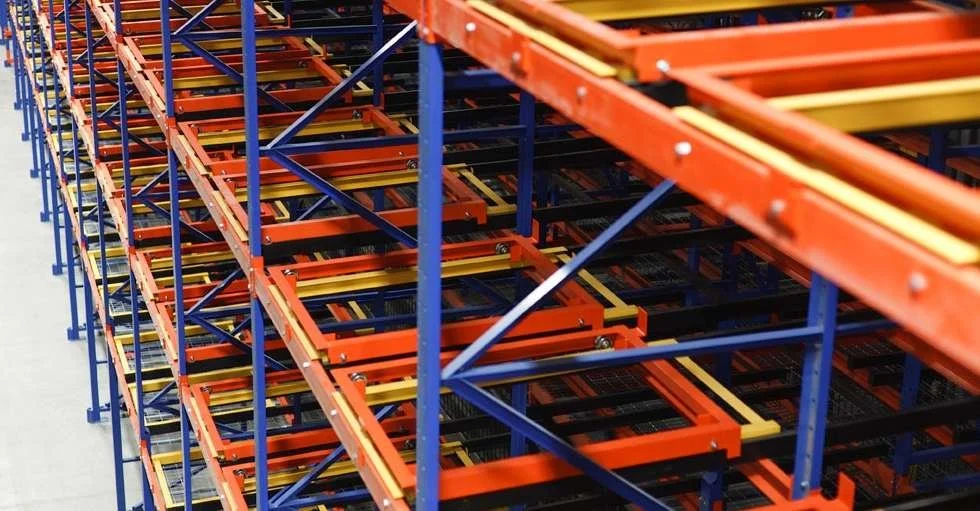
How to: Selecting the Right Depth of Pushback
1. One of the risks with any deep storage system is the risk of “checker boarding”. This happens when a deep lane storage system is selected, but there are too many individual SKU’s in the facility to efficiently fill the deep storage lane. FOR EXAMPLE: If you only have a single SKU of an item, and store it in a 6 deep lane, 5 positions of the lane are not filled resulting in 17% utilization of available storage capacity. Conversely if you have 50 pallets of the same item and store them in 9 lanes of 6 deep (54 available positions), [...]
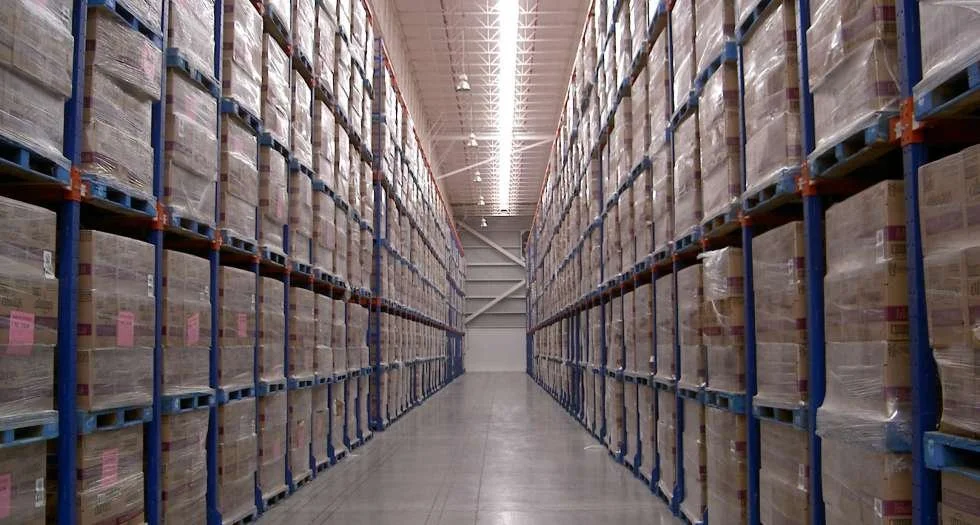
Inventory Mix Madness: Meeting increased demand and delivery
People want more options, faster delivery and unlimited access to product. Traditional warehousing is equipped to move large amounts of the same product efficiently and cost effectively. This means a large shift in inventory management is underway to meet larger SKU counts and more diverse customer demand. The warehouse landscape is evolving to support omni-channel operations under one roof to meet fulfillment needs and to create a tighter, more efficient supply chain operation. Here are three directions inventory management is trending: 1) Maximizing Cubic Space – More demand, flavors and options means more and more SKUs for a warehouse to stock. [...]
Grocery Digitization: Your Local Market Evolved
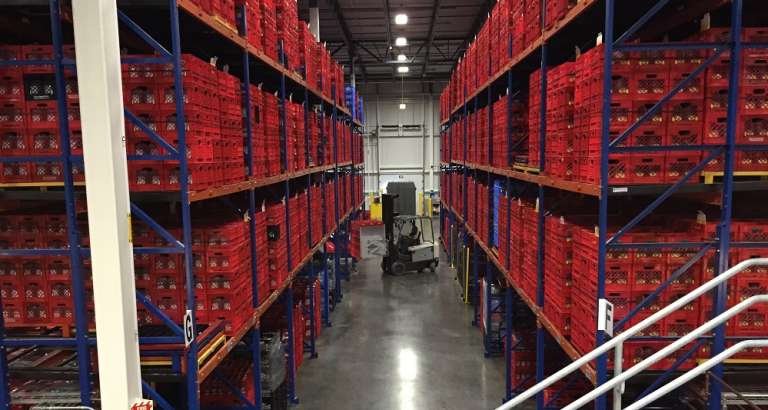
Grocery is evolving…this comes as no surprise but how grocery stores are re-structuring in 2019 and beyond answers many distribution and fulfillment questions. Customers expect more than ever from retailers and providing the best customer experience is paramount to success. Grocery shopping is no longer a chore but an event! Grab groceries, cooked meals, a drink at the bar or local cooking tips all from one location. Four grocery store trends in 2019 include eCommerce/automation integration, smaller store footprints, evolving customer experiences and a frozen food renaissance. […]
When Is Structural Rack The Best Choice?
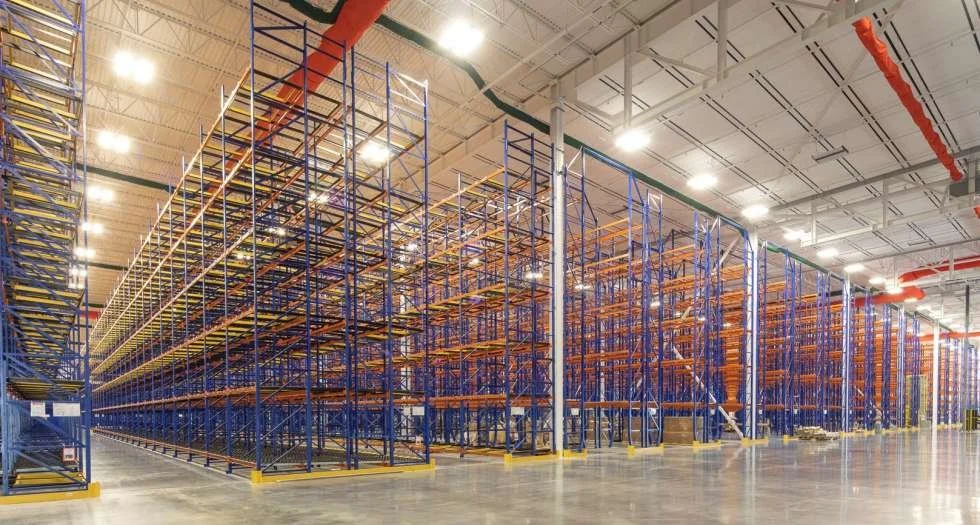
4 Advantages To Using Structural Racking In Your Warehouse Structural pallet rack is the strongest, most durable type of pallet rack available and is the most appropriate solution in temperature controlled and ambient warehouse environments that have heavy forklift traffic. Structural pallet rack may cost more up front but with greater durability, structural rack will translate into longer life and lower costs over the long term in your warehouse. Here are four considerations for implementing structural pallet racking in your warehouse: Durability / Impact Resistant: Compared to roll-formed rack, structural steel construction is heavier, with thicker channel corners and stronger steel […]
4 Selective Pallet Racking Advantages
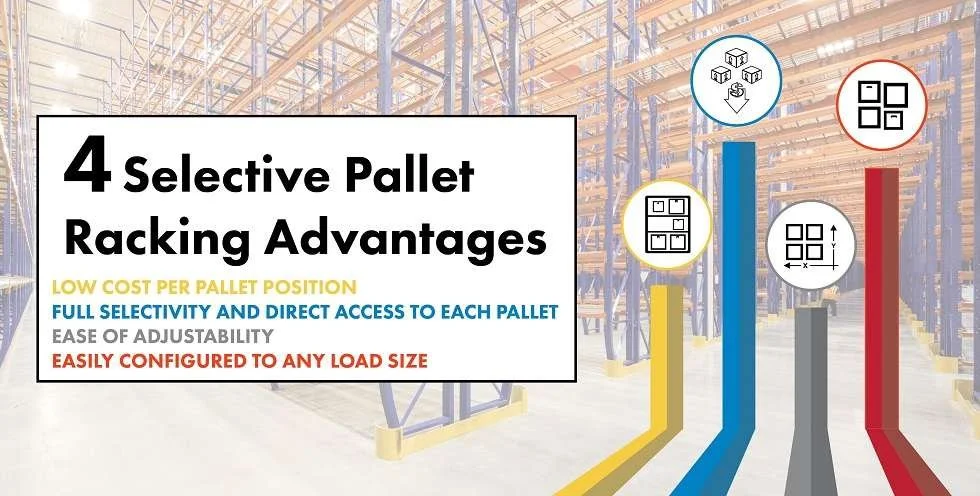
Selective pallet racking is commonly used in racking systems that accommodate flexibility in slotting design, which is ideal for high turnover, high SKU stock count and quick product accessibility. Single selective pallet rack is a cost-effective design that allows the maximum number of SKU pick facings in a standard rack and adds a number of throughput advantages to a warehouse including: Low Cost Per Pallet Positions Selective rack is the most common type of structural pallet racking and maintains the lowest upfront cost per pallet positions compared to other pallet racking systems. Low upfront costs and customized scalability make selective racking […]
3 Advantages To Using Pushback Pallet Racking Solutions
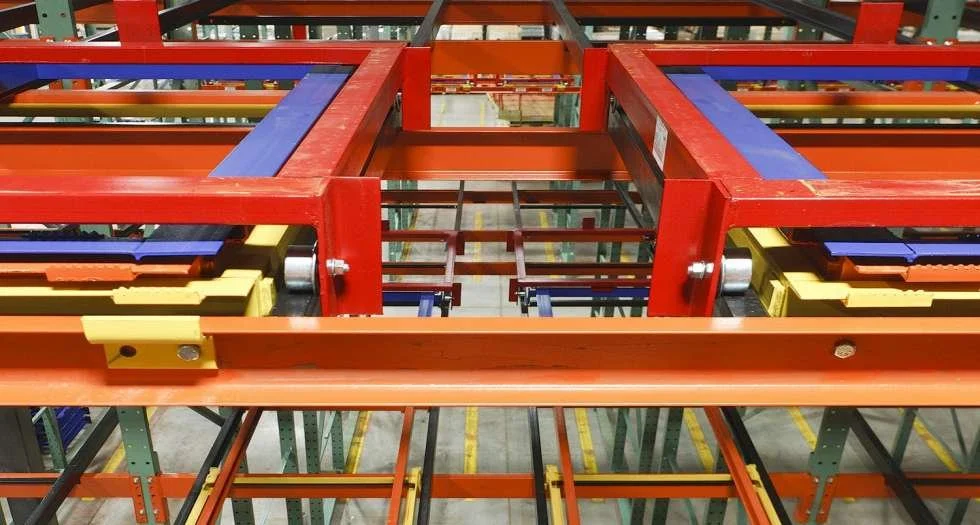
Pushback racking is a type of pallet storage system that allows 2 – 6 pallets deep to be stored on both sides of an aisle, providing high storage density than other pallet rack systems. A pushback rack system is a LIFO system normally composed of an inclined rail section that extends the full depth of the storage lane. The 3 main pushback advantages include higher density storage, faster operation and higher selectivity. High Density Storage Pushback racking ranges from 2 deep to 6 deep pallet positions that allow pallets to be stored on both sides of an aisle, providing higher density […]
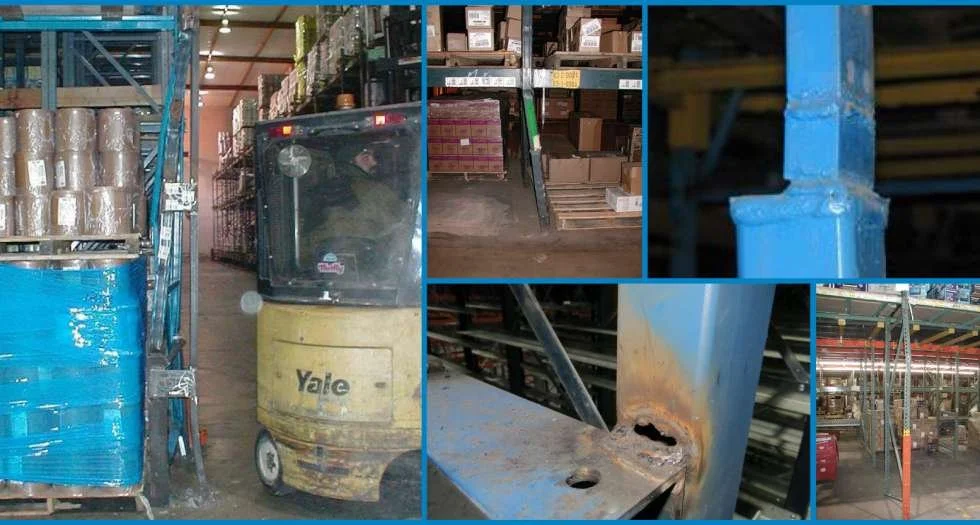
5 Tips To Maintain Warehouse And Rack Safety Compliance
Communication Is Key: Understand risk factors, develop a plan for addressing key problem areas and give employees the platform for addressing key problems on the job during day-to-day operations Bottom-up communication is vital for successful risk management because although management understands potential issues, workers working in risky environments have a more sophisticated understanding of each risk associated with their particular job requirement Open communication organizes safety initiatives to continuously improve safety protocol in the warehouse Employee Training Consistency: Consistent training and process updates keep safety protocol at the forefront of daily operations and is vital to establishing a consistently safe work […]
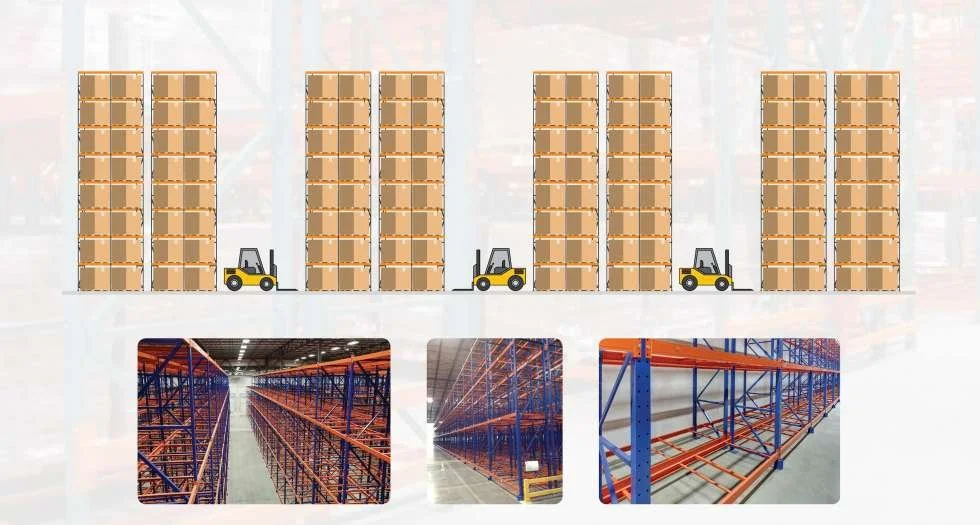
4 Advantages To Utilizing Double Deep Selective Pallet Racking In Your Warehouse
Double deep selective racking solutions provide twice the pallet positions per aisle of single selective racking, maximizing pallet storage while remaining a very basic rack configuration. Inventory flow changes to a FILO (First In, Last Out) configuration, which decreases selectivity, but the storage to aisle space ratio improves significantly. Here are 4 advantages to using double deep selective racking in your distribution center or warehouse. Low Initial Capital Investment: Double deep selective racking solutions deliver 50% more storage capacity than single selective at the lowest cost available for structural pallet racking. This low cost solution delivers high inventory access for many […]
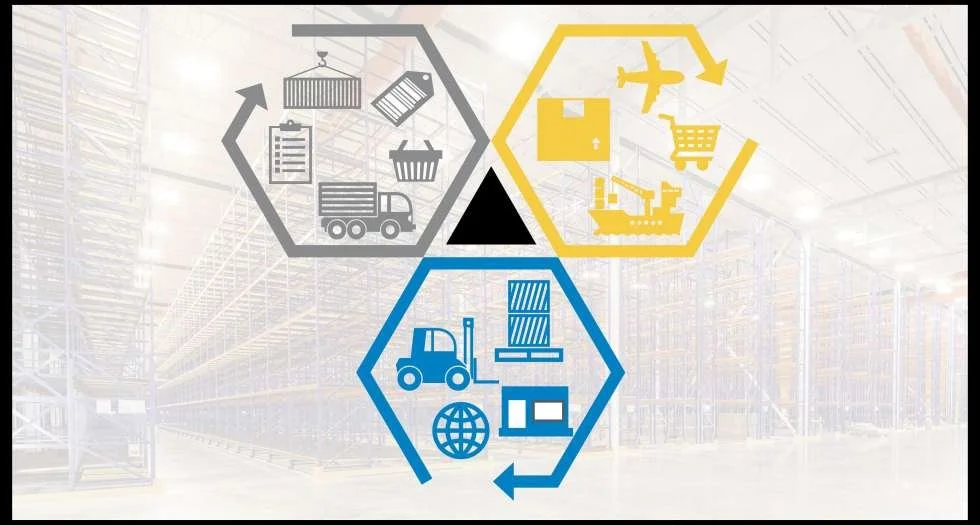
3 Benefits Of Omni-Channel Distribution Integration
Omnichannel – “A multi-channel approach to sales that seeks to provide customers with a seamless shopping experience, whether they are shopping online from a desktop or mobile device, by telephone or in a brick and mortar store.” Ecommerce and the Amazon effect have affected the distribution landscape in such a way that it may no longer be beneficial to foster individual communication channels with your customers. Operating an omni-channel distribution system that incorporates all devices, communication channels and customer contact opportunities appears crucial to compete in this competitive retail environment. Distributors and warehouse managers must be flexible to meet customer demand […]
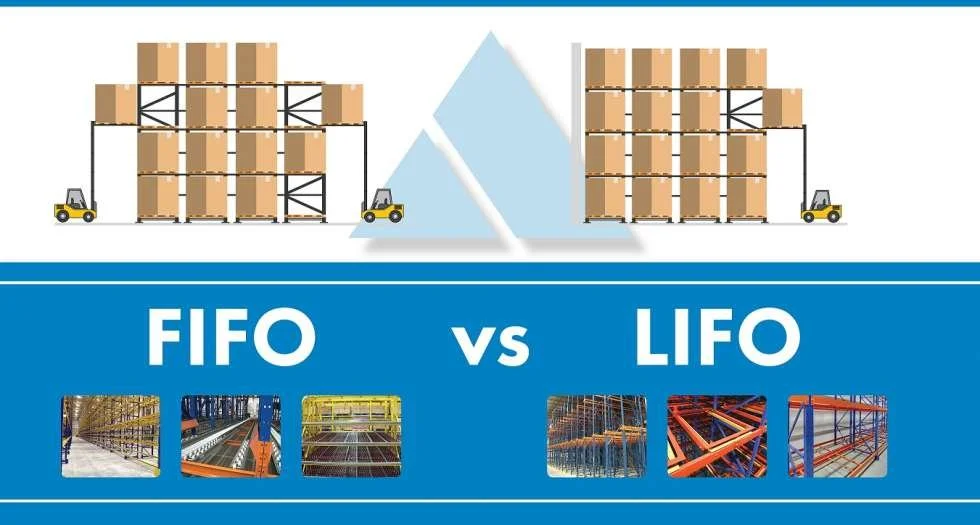
FIFO vs LIFO Inventory Flow
FIFO (First In, First Out) – An inventory flow where the first item in is the first item to leave the warehouse or racking solution. Stock Keeping Units (SKU’s) enter and the first in is the first to leave a DC or warehouse. This type of inventory flow is ideal for perishable goods and SKU types with expiration dates. FIFO Advantages – Provides immediate access to products and is ideal for high turnover, high SKU stock count and quick product accessibility. Also provides ultimate flexibility in SKU arrangement and SKU types. FIFO Disadvantages – Poor use of cubic warehouse space and […]
When is Your Operation a Good Candidate for an automated storage and handling system?
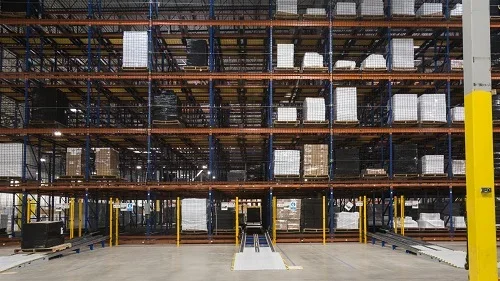
Automated storage and handling systems can substantially increase your throughput and storage density capabilities but how do you know if an automated storage and retrieval system will benefit your warehouse operations? Here are a few things to consider: When your operation is running 18-24 hours a day, 5 to 7 days a week: Typically single shift operations do not generate enough labor savings to justify converting a warehouse to automation. However, when a warehouse operates for 18-24 hours a day, the labor savings are 2-3 times, thus creating much greater labor savings when the operation is automated. Simply, the more you […]
How Much Weight Can a Rack System Hold?
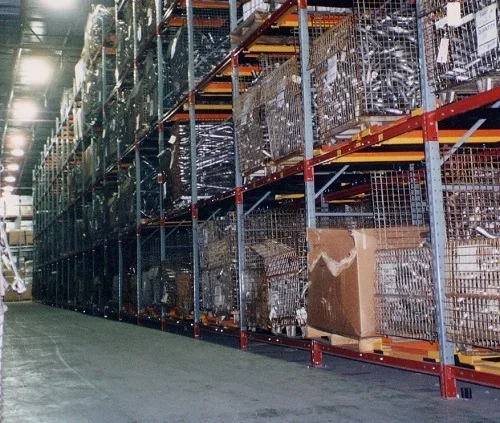
While this is one of the most frequently asked questions, the answer is unfortunately, “it depends”. How much weight a rack system can hold depends on a number of factors including: Load Beam Capacity: The first step in determining a rack system capacity is what weight can each pair of beams hold. Beam capacity varies depending on beam material, height and construction materials. Most manufacturers provide standard load tables that can be used as a guideline. Published capacity charts are generally based on evenly distributed loads but do not take into account seismic or other special criteria. Upright Capacity: While determining […]

How Do You Maintain A Safe Rack System?
Rack systems should be inspected by a qualified rack system inspector at least once a year, more often if there is frequent system damage. Results of the inspections should be documented and maintained for future reference. While a visual inspection will show obviously damaged it is very important to follow a few simple steps. These 5 tips will help keep your rack system safe: Never exceed the rack capacity displayed on the capacity sign: End of Aisle Capacity plaques should be provided by the rack manufacturer and hung in a clearly visible place at the end of each aisle. These show […]
4 Things to Know when Installing Rack in a Cold Storage Facility
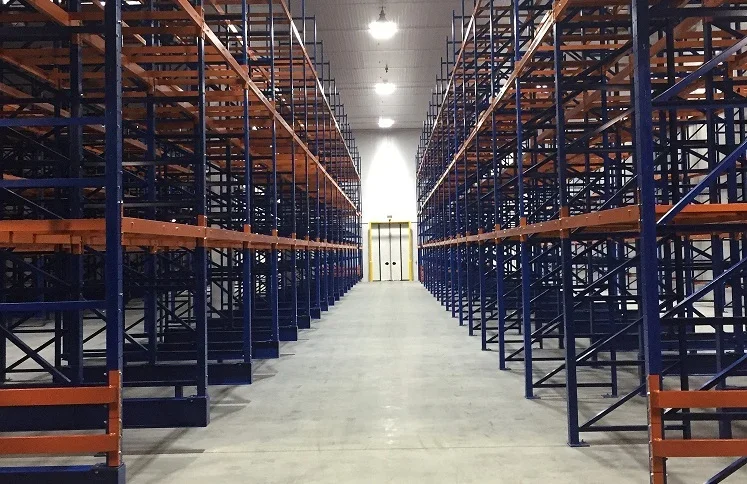
What things should you consider when you are installing rack in a cold storage facility? Warehouse operation in industrial freezer facilities requires special care to ensure that you have a safe and long lasting system. A few factors to consider: 1. Damage Control: Due to the harsh operating conditions, freezer rack is typically subject to much higher damage rates than are normally seen in ambient conditions. For this reason, the majority of freezer facilities have adapted structural rack systems with doubled front columns and end aisle protection. Reinforced structural rack systems are subject to significantly less damage and lower maintenance costs […]
How Much Does a Rack System Cost?
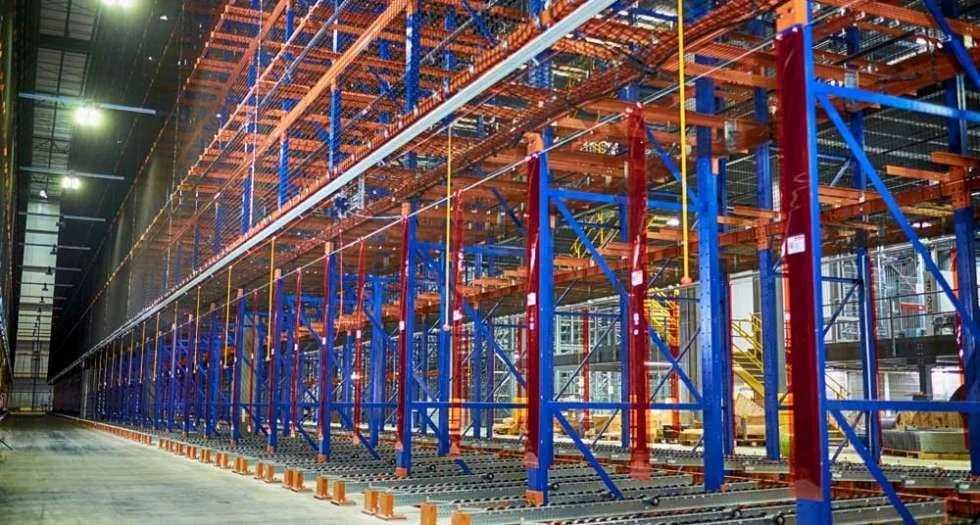
When selecting a rack system, it is important to look at the total system cost, rather than just the rack itself to ensure that you are selecting the overall system that will provide the best long term value for the operation. Some factors to consider: Style of Rack: Rack systems can range from single deep selective rack, all the way up to high density pushback and drive in systems, light duty roll form, to heavy duty structural. The higher density system that is selected, the smaller the foot print that will be required. Pallet rack system cost can often be budgeted […]
What to do if a Rack System is Damaged
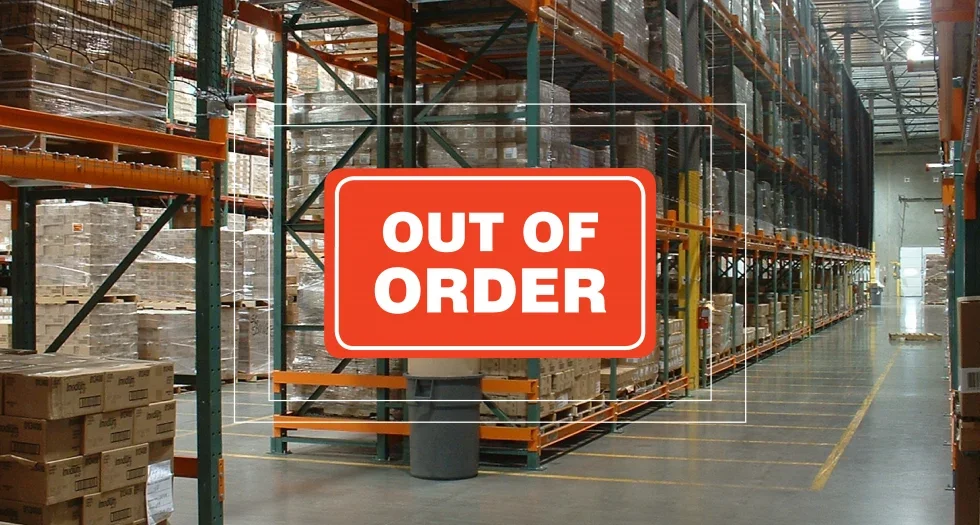
Rack systems are designed to meet a specific set of load and performance criteria based on the assumption that the components are intact and not damaged. Any time a component is damaged, the capacity/integrity of the system is reduced and compromised. Significant damage to a single component, or an accumulation of damage to multiple components in the system can lead to catastrophic failure putting employees at risk. What should you do when you find damage to the Rack System? For damaged load beams, remove the loads from the beam and mark for repair. For damaged uprights (bent columns, sheared anchors, damaged […]
7 Mistakes to Avoid When Designing a New Distribution Center
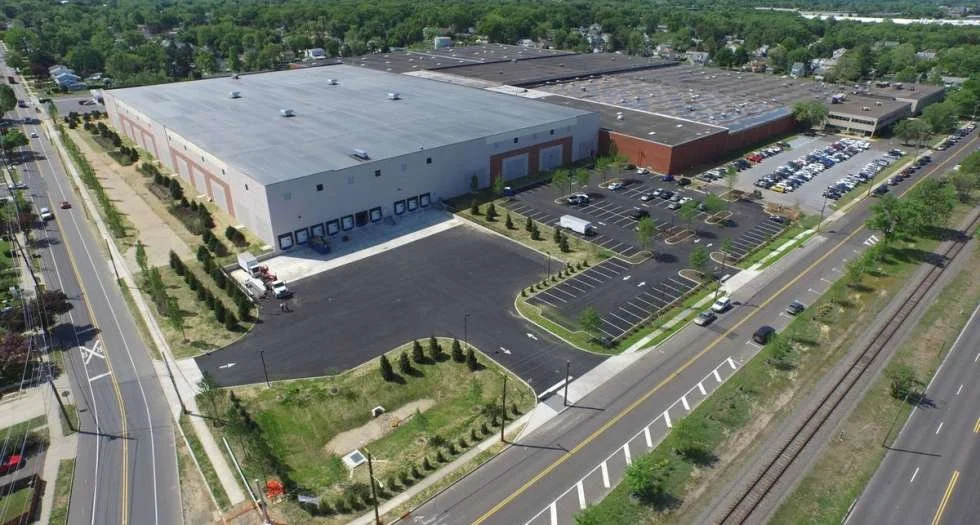
Designing a new distribution center is a complicated process involving numerous factors that must be addressed to ensure success. After observing thousands of rack system project installations, below are a few common mistakes that we have seen made during the design process that either delay or slow the opening of the facility, or longer term affect the overall efficiency and safety of the facility. 1. Loads to be stored are not clearly defined: Everything in a distribution center revolves around the loads that need to be stored, and the pallets that they are placed on. It is critical to be sure […]